Software Supply Chain Security Trends 2026
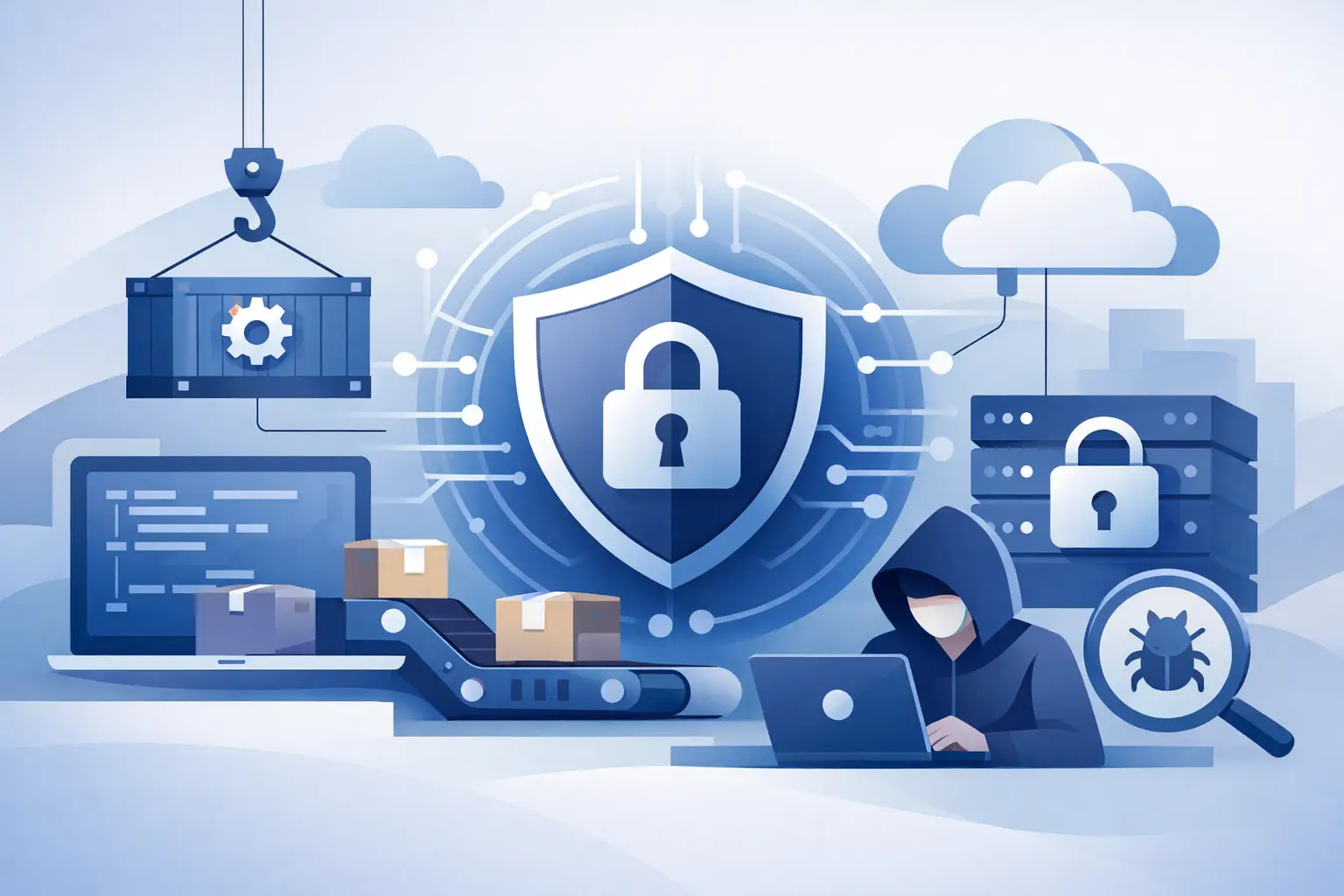
An online store's ordering process, a warehouse integration, or a manufacturing data connection rarely consists solely of proprietary code. Open-source packages, external APIs, container images, CI/CD tools, and developer services form a long chain of operations in the background.
Short Answer
An online store's ordering process, a warehouse integration, or a manufacturing data connection rarely consists solely of proprietary code. Open-source packages, external APIs, container images, CI/CD tools, and developer services form a long chain of operations in the background.
An online store's order process, a warehouse integration, or a manufacturing data connection rarely consists solely of custom-developed code. Open-source packages, external APIs, container images, CI/CD tools, and developer services form a long chain operating in the background. Therefore, software supply chain security trends are not theoretical IT security topics: they directly affect business continuity, the reliability of changes, and the manageability of technical risks.
The managerial question is not whether the company uses external components. It almost certainly does. The question is whether it knows exactly which systems, in what version, with what permissions, and under what control these elements are running.
The Business Significance of Software Supply Chain Security Trends
The software supply chain encompasses all components and processes leading from source code to the live system. This includes program libraries, build environments, package repositories, container registries, automated tests, deployment processes, and external developer or operational accesses.
A single undocumented dependency or deployment token with overly broad permissions may not cause immediate problems. However, when an urgent fix, audit, supplier change, or incident occurs, it quickly becomes apparent whether the company has real control. The risk is particularly high in environments where ERP, online stores, WMS, billing, carrier services, and manufacturing systems are interconnected.
The focus, therefore, shifts from mere vulnerability scanning to the authenticity of the entire change chain. It's not enough to know if a component is known to be vulnerable. It must also be verifiable where it came from, who approved it, what build process produced it, and exactly what was deployed into the live infrastructure.
1. A complete inventory of dependencies becomes a basic requirement
Most business applications use hundreds, sometimes thousands, of direct or indirect dependencies. Some of these are visible to developers, while others arrive as part of another package. Therefore, a manually maintained component list quickly loses its value.
One of the defining directions for the coming period is the use of a machine-generated software component list, or SBOM. This is not an administrative document in itself, but a queryable technical record of what elements make up a given release. If a critical bug becomes public, the SBOM can shorten impact analysis: instead of guessing, it identifies which systems are affected.
However, the SBOM is only useful if it is linked to release discipline. An old, manually exported list does not provide a solid foundation. It is advisable to automatically generate, version, and link the data to the installed package for each build.
Not all dependencies are equally risky
The risk of components should not be judged solely by the number of technical vulnerabilities. It also matters whether the element is accessible from the internet, whether it has access to business data, how often it is updated, whether it has an active maintenance community, and what impact its failure would have on operations.
An old library of an internal reporting tool has different priorities than a component that receives order data or forwards inventory information to multiple external systems. Best practice here is to manage business criticality and technical exposure together.
2. The build process as a protected production system
Many organizations treat the CI/CD environment as a developer convenience tool. In reality, this system produces the deployable software, so its protection requires similar discipline to that of a business-critical integration or data processing environment.
The trend is towards reproducible and verifiable build processes. The essence is that the state of the source code, the build environment used, the approval, the tests run, and the artifacts produced can be traced back for a release. Deployment should not occur from a developer's workstation or an unknown origin file, but through a regulated channel.
Code signing and artifact authentication are becoming increasingly important. These do not solve all problems by themselves, but they help distinguish an approved release from a modified or unchecked package. For larger companies managing multiple environments, this is particularly valuable as it reduces the risk of discrepancies between test, staging, and live systems.
3. Short-lived permissions and stricter access models
A common weak point in the software supply chain is not the code itself, but access. Long-valid tokens, shared service accounts, and overly broad deployment permissions often remain in the system for convenience. However, during a later audit or incident, it is difficult to determine who used them, when, and for what purpose.
The more modern model uses short-lived, task-specific credentials. The build process only accesses the package repository, environment, or service necessary to complete the task. This is the principle of least privilege, which requires planning from both development and operational sides.
The compromise is clear: stricter access initially requires more configuration and a more precise responsibility framework. In return, fewer hidden dependencies remain in processes, and it becomes easier to review permissions. For an organization working with multiple suppliers or internal teams, this does not slow down releases but makes them more predictable in the long run.
4. Monitoring external providers and integrations
The software supply chain does not end at the package manager. An API connection of a business system, data exchange with a logistics provider, or a SaaS-based developer tool is also part of the operational chain. If an external system changes, becomes limited in availability, or modifies its permission model, it can have business consequences.
Therefore, more and more companies are incorporating development and integration aspects into supplier risk management. It's not just about contractual compliance, but also having a documented interface, change management process, auditability, revocable access, and a realistic recovery plan.
This is especially important for legacy systems. If an old ERP module or unsupported middleware element is an indispensable part of the order or production process, the security approach is not always immediate replacement. The interim solution may involve network isolation, modernizing the integration layer, narrowing permissions, and a gradual replacement plan. The right decision depends on business dependencies and the risk of change.
5. Security becomes embedded in development management
In the coming years, protecting the software supply chain will be less of a separate security project. Development standards, architecture review, release approval, and operational monitoring will become part of it. This approach works if controls are automated, understandable, and aligned with actual operations.
Too many poorly tuned controls easily lead to ignored alerts and slow releases. Too few controls allow for opaque changes. The goal is not to block development, but to create gates that highlight truly high-risk deviations: packages of unknown origin, critical vulnerabilities, unauthorized releases, or unjustified permissions.
In CGAT's practice, such issues are always part of the complete system picture. An application's security cannot be separated from server operations, backup procedures, network segmentation, integration logging, and change documentation. The goal is a sustainable operational model where the company can not only respond to a problem but also quickly determine its scope.
The best next step is usually not the immediate acquisition of a new tool, but an honest technical inventory: which business systems are critical, what they are built from, how they are released, and who is responsible for access. From this, a development and operational framework can be established that supports growth, not just reduces risks.
Planning a similar system or integration?
Show us the current process and systems. We will help identify the lowest-risk next step.
Key Takeaways
- A complete inventory of dependencies is essential for business applications.
- The build process should be treated as a protected production system.
- Short-lived permissions and stricter access models enhance security.
- Monitoring external providers and integrations is crucial for risk management.
- Security becomes embedded in development governance.
Frequently Asked Questions
Why is a complete inventory of dependencies important?
A complete inventory of dependencies is crucial because it helps identify which systems are affected by vulnerabilities, ensuring better control over software components.
How can the build process be secured?
The build process can be secured by treating it as a protected production system, ensuring reproducible and verifiable build processes, and using regulated channels for deployment.
What is the principle of least privilege?
The principle of least privilege involves using short-lived, task-specific credentials, allowing access only to the necessary resources, thereby reducing security risks.
Related Engineering Insights
Automating Reporting for Executive Decisions
Automating reporting for executive decisions: less manual data collection, clearer indicators, faster and more verifiable executive decisions in practice.
Unifying Dispersed Business Data in Practice
Unifying dispersed business data doesn't start with a new system. First, uncover the data's path, the errors, and the manual steps that slow decision-making.
Reducing Manual Data Entry in Companies
Reducing manual data entry in companies is not just about automation: it leads to clearer processes, fewer errors, and more reliable decisions.