Business Automation for Growth
Business automation generates value when processes, data, and responsibilities are in order before consistently implementing a new system.
Short Answer
Business automation creates value when processes, data, and responsibilities are well-organized before introducing a new system.
In the mornings, someone downloads the webshop orders and manually enters them into another system. The warehouse works from a separate spreadsheet, billing receives data via email, and on Fridays, three people compile the management report numbers. These tasks often take only a few minutes individually. However, together they highlight why business automation is becoming a key issue for growing companies.
The real question is not what can be automated. First, it is essential to understand why people perform the task manually, where the information comes from, who checks it, and what happens if the person is on leave or makes a mistake. Speeding up a poorly designed process is not an improvement. It just produces the same error faster.
When is business automation justified?
In most companies, it is not a single major problem that indicates the need but recurring symptoms. Administration grows with revenue. The same customer, order, or product data is recorded in multiple systems. Colleagues do not trust the information shown by the system but rely on their own Excel files. Management regularly has to request data separately because there is no reliable, shared view of the current operations.
In such cases, it's easy to say that a new ERP, CRM, or AI-based solution is needed. Sometimes this is indeed the right direction. Other times, a data connection between two existing systems, simplifying an approval step, or an internal application that consolidates scattered information is sufficient.
Automation is justified when a repetitive task can be performed based on rules, inputs are reliably available, and handling exceptions is clarified. Not all manual work is unnecessary. Evaluating a unique quote, supplier decision, or quality deviation often requires human experience. The goal is not to replace human decision-making but to ensure that employees do not spend their time on data copying and information searching.
First, the process needs to be put in order
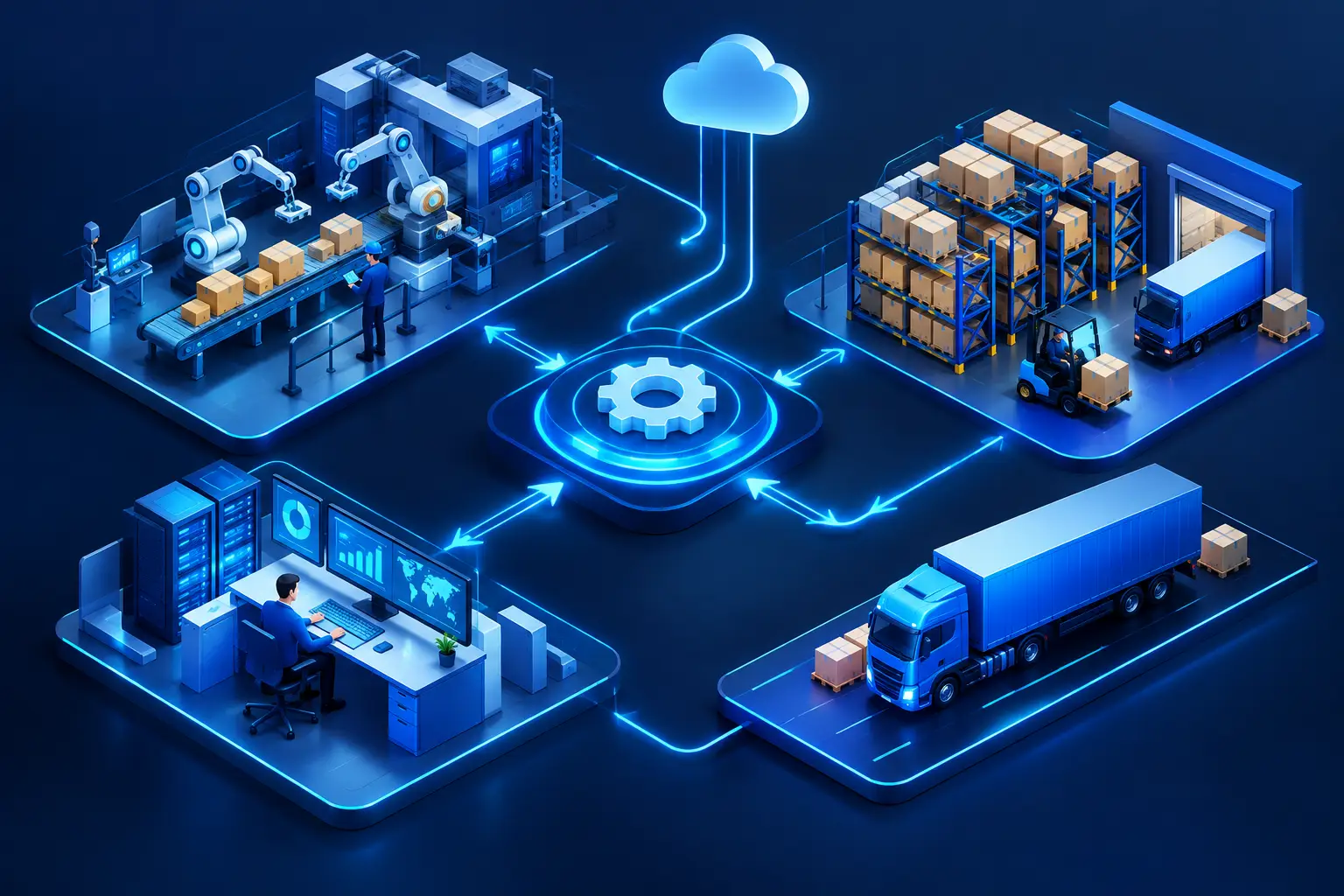
The path of an order is often much more complex than it first appears. It arrives from the webshop or via email, someone checks the stock, another colleague approves a condition, the warehouse issues the goods, finance invoices, and then the data must be forwarded to the logistics partner. If there are emails, phone calls, and manual copies between these steps, delays and errors become embedded in the operation.
Therefore, the right starting point is not the software list but mapping the process. It's worth reviewing what event triggers the work, what data is needed, where new information is generated, who is responsible for each decision, and where the case stops. Points where a person "connects" two systems or where a spreadsheet replaces the missing common data source are particularly revealing.
Three questions can prevent many unnecessary developments: is this step really necessary, has the same data already been recorded somewhere, and what happens if the person is unavailable? If a check has no clear business purpose, it may be omitted. If the same data appears in three places, integration or common master data management is likely more valuable than another form. If a critical task relies on one person's knowledge, documenting and clarifying responsibilities is at least as important as the technology itself.
Exceptions determine whether it will work
Many automation projects are designed for the normal case, but exceptions complicate the company's daily operations. What happens if the order data is incomplete? If the price differs from the contracted terms? If there is no stock, but the customer requests partial delivery? If data arrives in the wrong format from a partner's system?
These do not need to be made fully automatic at all costs. A good solution may be if the system recognizes the deviation, directs the case to the appropriate person, shows the necessary history, and logs the decision. This way, routine tasks are handled by machines, and exceptions receive controlled human attention. This is faster and safer than when the problem gets lost in a mailbox.
Where is the greatest business value generated?
Not necessarily where the most work hours are visible. A daily ten-minute data entry consumes significant time annually, but a stoppage or incorrect billing due to faulty stock information can incur even greater costs. Therefore, in addition to time savings, the cost of errors, customer experience, decision speed, and business continuity should also be considered in the evaluation.
For example, a data connection between the webshop, warehouse, ERP, billing, and carrier system can provide shorter lead times, but it means more than that. Stock data will be more consistent, customer service sees the same as the warehouse, and management can more reliably track performance. A well-designed integration does not simply move data. It clarifies which system is the authoritative source of the data and under what rules it can change.
The situation is similar in manufacturing. If the production status reaches planning or sales late, the entire organization reacts late. Here, a complete system replacement may not bring the first results. Better linking of machine data, work orders, and order priorities may provide the transparency that reduces the need for urgent rescheduling.
Data quality is not a technical detail
In an automated process, erroneous or incomplete data spreads faster than in manual operations. If a partner's name appears in different ways, if item numbers are not consistent, or if the inventory does not reflect reality, automation only transmits the problem more consistently.
Therefore, before any development, it is worth defining data owners, mandatory fields, validation rules, and those responsible for data changes. It's not glamorous work, but it's essential. A good report is not good because it shows graphs but because the leader can trust the numbers and base decisions on them.
Permissions and auditability are also part of this. In automated approval, it must be known who initiated the case, what conditions were met, who intervened, and why. This is especially important in financial, quality assurance, or regulated industrial processes, but it also protects the company from misunderstandings and personal dependencies in everyday operations.
Starting small doesn't mean thinking small
The best first step is often a well-defined, measurable process. For example, the automatic transfer of order data, checking information needed for billing, or replacing the compilation of management reports. Such development has a clear starting state: how long it takes, how many errors occur, how many people are involved, and what the lead time is.
However, a pilot is only useful if it fits the future system picture. A quick, standalone solution can help in the short term but may create another data island. Therefore, the architecture must be designed from the outset to ensure that future connections, systems, and business units remain manageable. This does not mean building everything at once. It means that the first decisions do not close off future opportunities.
In CGAT's approach, business automation is not an independent technological goal but disciplined operational development. The solution may be system integration, a custom internal application, reporting development, or modernizing an old system. The right choice is always determined by how the company actually operates, not by which technology is the loudest in the market.
It's worth selecting a process that the team has been handling based on "this is how we've always done it." Follow it from start to finish, note where information waits, where it is copied, and where someone has to fill in a missing rule from memory. This practice alone can show that the next development step is not a bigger system but clearer operations.
Planning a similar system or integration?
Show us the current process and systems. We will help identify the lowest-risk next step.
Key Takeaways
- Ensure processes, data, and responsibilities are well-organized before implementing automation.
- Automation can address recurring issues rather than a single major problem.
- Consider both time savings and error costs when evaluating automation benefits.
Frequently Asked Questions
When is business automation justified?
In most companies, the need is indicated not by a single major problem, but by recurring symptoms. Administration grows with revenue, and the same customer, order, or product data is recorded in multiple systems. Colleagues trust their own Excel files over system data, and management regularly requests data separately due to a lack of a reliable, shared view of current operations.
Where is the greatest business value generated?
Not necessarily where the most work hours are visible. A daily ten-minute data entry can consume significant time annually, but a downtime or incorrect billing due to faulty inventory information can incur greater costs. Therefore, evaluations should consider error costs, customer experience, decision speed, and business continuity alongside time savings.
Related Engineering Insights
How to Manage Key Person Dependency?
Here's how to manage key person dependency: uncover hidden knowledge, redesign critical processes, and strengthen operational reliability for growth.
How to Plan Low-Risk Developments
Here's how to plan low-risk developments: from uncovering processes to gradual implementation, achieving measurable business results with fewer errors, guaranteed.
Real Example of Reducing Warehouse Errors at a Company
Real example of reducing warehouse errors: how picking discrepancies were reduced through process analysis, cleaner data, and targeted changes.